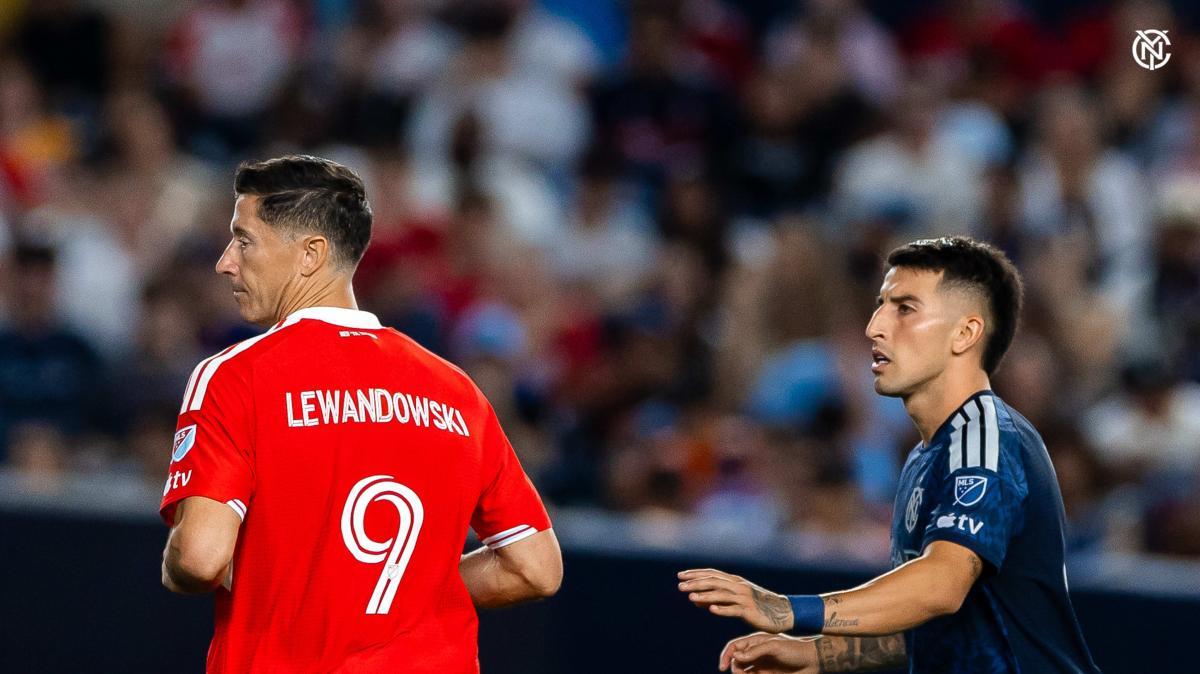
Robert Lewandowski’s move to Major League Soccer was supposed to be a seismic shift for the Chicago Fire, a franchise starving for marquee impact and global attention. Instead, the Polish icon’s first two appearances have delivered a sobering truth: even the most decorated strikers need time, structure, and service to thrive in a league that does not pause for pedigrees. Against New York City FC at Yankee Stadium, Lewandowski entered at halftime with his team already trailing 3-1 and spent 45 minutes chasing a game that never bent back in Chicago’s favor.
The final score—3-1 to NYCFC—masked how far behind the Fire were when Lewandowski took the pitch. Nicolas Fernández had opened the scoring in the 10th minute, Agustín Ojeda doubled the lead in the 29th, and Malachi Jones added a third just before the break, leaving Chicago with a mountain to climb. Lewandowski replaced Maren Haile-Selassie at the 46th minute, tasked with injecting urgency and quality into a side that had already conceded three.
A Halftime Gamble That Couldn’t Turn the Tide
From the opening whistle of the second half, Lewandowski’s role was clear: find space, link play, and create a breakthrough. But the game script offered little room for a classic penalty-box predator. Chicago were not merely behind; they were disjointed, repeatedly losing duels and surrendering possession in dangerous zones. Lewandowski’s first notable chance arrived in the 48th minute—a right-footed effort from close range that was blocked almost immediately, registering an xG of 0.40 but an xG on target of 0.00. It was a microcosm of the night: a promising look, snuffed out before it could threaten.
His second shot came much later, in the 82nd minute. A delivery from Jonathan Dean found Lewandowski in the air, but his header was off target and easily gathered, carrying a modest xG of 0.13. In total, he recorded two shots, one on goal, and remained without a goal or assist—extending his personal tally to zero in two MLS appearances since joining Chicago as a free agent in late June. For a player whose career has been defined by ruthless efficiency, the stat line reads less like a statement and more like a work in progress.
Tactically, the challenge was compounded by Chicago’s defensive fragility. The Fire committed 16 fouls and failed to register a single save across the match, underscoring how much of the second half was spent reacting rather than controlling. Lewandowski entered with Chicago chasing the game, and the visitors’ inability to stabilize at the back meant the attack often lacked the platform to build sustained pressure.
What the Numbers—and the Game Film—Really Say About Lewy’s Fit in MLS
Beyond the box score, the underlying metrics hint at both promise and limitation. Lewandowski’s two attempts generated a combined xG of 0.53, suggesting he found decent positions but could not convert them into clear-cut threats. His movement remains sharp—evident in how he arrived in the box for both chances—but the service around him was inconsistent, and the team’s overall rhythm in the final third lacked the cohesion needed to maximize his instincts.
There is also the context of adaptation. Lewandowski made his MLS debut on July 22 against Inter Miami, starting and logging 63 minutes in a 3-2 defeat. Against NYCFC, he played the full second half, offering the coaching staff a clearer view of his fitness and integration. Yet both matches have ended in losses, and the narrative is hard to ignore: Chicago have dropped two straight since his arrival, with the star striker still awaiting his first goal in red.
For now, the takeaway is measured optimism rather than alarm. Lewandowski is 37, joining a new league after a long spell in Europe, and his first two outings have come in high-pressure, deficit-heavy scenarios. The Fire’s broader issues—defensive lapses, midfield disconnection, and a lack of sustained chance creation—cannot be solved by one player, however legendary. As the season progresses, the question is not whether Lewandowski can score in MLS, but whether Chicago can build a system that consistently puts him in positions where his finishing does what it has always done: decide games.
Until then, the Bronx served as a reality check. The spotlight was bright, the occasion was big, and the result was blunt. Lewandowski’s Chicago story is only just beginning, but after 107 minutes across two matches, the ledger still reads: zero goals, zero assists, two defeats. The next chapter must deliver more than promise—it must deliver points.
Other news - MLS










Other news
- 18:00 NYCFC Turn Their Focus to New England: What Must Improve After Nashville?
- 16:30 Can NYCFC Keep Competing Until Moralez, Parks and Hannes Wolf Return?
- 15:00 NYCFC 0-0 Nashville: One Point Gained or Two Points Lost?
- 21:30 NYCFC Defend With Character, but the Attack Still Needs More Ruthlessness
- 20:00 Aiden O’Neill Makes His Mark for NYCFC: A Valuable Defensive Option for Pascal Jansen
- 18:30 NYCFC Show Their Depth: Seven Players Missing, Yet Another Clean Sheet
- 17:00 Pascal Jansen’s NYCFC Rotation Worked Defensively — But Questions Remain in Attack
- 15:30 Nico Fernández Mercau Sets the Tone: Why His Pressing Is Crucial for NYCFC
- 14:00 Bénie Traoré and Luighi Show Early Chemistry: NYCFC’s New-Look Attack Is Taking Shape
- 23:00 Luighi’s Next Step at NYCFC: From Rising Star to Consistent MLS Threat
- 22:00 Raul Gustavo’s Costly Scare: What NYCFC Must Learn From the Mukhtar Chance
- 21:00 Malachi Jones Nearly Wins It for NYCFC: Has He Earned More Minutes?
- 20:00 Agustín Ojeda Shines for NYCFC: Is a Breakout Run About to Begin?
- 19:00 NYCFC’s Biggest Problem Is Clear: Who Is Going to Score the Goals?
- 18:00 Matt Freese Saves NYCFC Again: Is He Becoming the Team’s Most Important Player?
- 17:28 NYCFC Held to 0-0 Draw by Nashville SC at Yankee Stadium
- 18:30 NYCFC Need Their Identity Back: What Happened to the Aggressive, Fearless Team Fans Expected?
- 17:00 What Should NYCFC’s Real Goal Be Now: MLS Cup, a Playoff Run or Building for 2027?
- 15:30 Nashville and New England Could Define NYCFC’s Season — The Next Two Games Suddenly Feel Massive
- 14:00 Can NYCFC’s Young Core Carry the Club Into Its Next Era?
- 20:00 NYCFC’s Next Transfer Window Could Define the Future: Three Positions New York Must Reinforce
- 18:30 Is Pascal Jansen Building the Right NYCFC for the Future? The Answer Is Still Complicated
- 17:00 NYCFC Need a Killer Instinct: Good Performances Are No Longer Enough
- 15:30 From MLS Cup Dreams to Playoff Anxiety: Where NYCFC Really Stand Right Now
- 14:00 Can NYCFC Still Win MLS Cup in 2026? Five Reasons to Believe — and Five Reasons to Worry
- 19:00 NYCFC’s Defense Has Talent — So Why Does It Still Look So Vulnerable?
- 17:30 The Keaton Parks Question: Is He Still Essential to NYCFC’s Midfield Future?
- 16:00 Without Alonso Martínez, NYCFC Need a New Source of Goals — Who Is Ready to Step Up?
- 14:30 Luighi’s Big NYCFC Opportunity: Can the Brazilian Prospect Become New York’s Next Starting Striker?
- 13:00 NYCFC’s Five-Game Winless Run Is Becoming a Real Problem — Can Pascal Jansen Fix It Before the Slide Gets Worse?
- 04:00 NYCFC’s Injury Crisis Is Exposing a Bigger Question: Is the Roster Deep Enough to Compete for MLS Cup?
- 03:00 NYCFC Keep Dropping Leads — Is This Becoming a Mental Problem?
- 02:00 Pascal Jansen Under Pressure: Are His In-Game Decisions Costing NYCFC Points?
- 01:00 Matt Freese Keeps Saving NYCFC — But New York Cannot Keep Asking Its Goalkeeper to Rescue Every Game
- 00:01 Nico Fernández Mercau Is Becoming NYCFC’s Most Important Attacking Player
- 23:00 NYCFC Are Sliding at the Worst Possible Time: Five Games Without a Win and the Table Could Turn Ugly
- 22:00 Pascal Jansen’s Risky Substitution Backfired: NYCFC’s Left Side Collapsed Before Toronto’s Equalizer
- 21:00 NYCFC Threw Away Two More Points: This Time Pascal Jansen Has to Share the Blame
- 19:04 NYCFC Let Another Lead Slip: Fernández Mercau Stunner Not Enough to Finish Toronto Job
- 16:00 NYCFC Faces a Season-Defining Night in Toronto: Win or Invite a Playoff Crisis
- 15:00 Etihad Park Installs Its First Seat — NYCFC’s Long-Awaited Home Is Finally Becoming Real
- 14:00 Toronto vs. NYCFC Has Suddenly Become a Must-Win Match for Pascal Jansen
- 13:00 NYCFC’s Playoff Dream Could Be Destroyed by an Unprecedented Injury Emergency
- 19:00 Pascal Jansen’s Ruthless Double Substitution May Have Saved NYCFC’s Season
- 18:00 Has Maxi Moralez Already Played His Final Game for NYCFC?
- 17:00 NYCFC’s Injury Crisis Is Getting Out of Control — Can the Playoff Push Survive?
- 16:00 This One-of-One Knicks Championship Card Could Become a Record-Breaking Collectible
- 15:00 James Sands Is Becoming NYCFC’s Emotional Leader at Exactly the Right Time
- 14:00 Matt Freese’s Incredible Double Save May Have Rescued NYCFC’s Season
- 13:00 NYCFC Makes Bold Move for Alexandru Musi — Is He the Missing Piece in New York’s Attack?
- 07:54 NYCFC Rejects $25 Million for Nico Fernández Mercau: Ambition or a Massive Gamble?