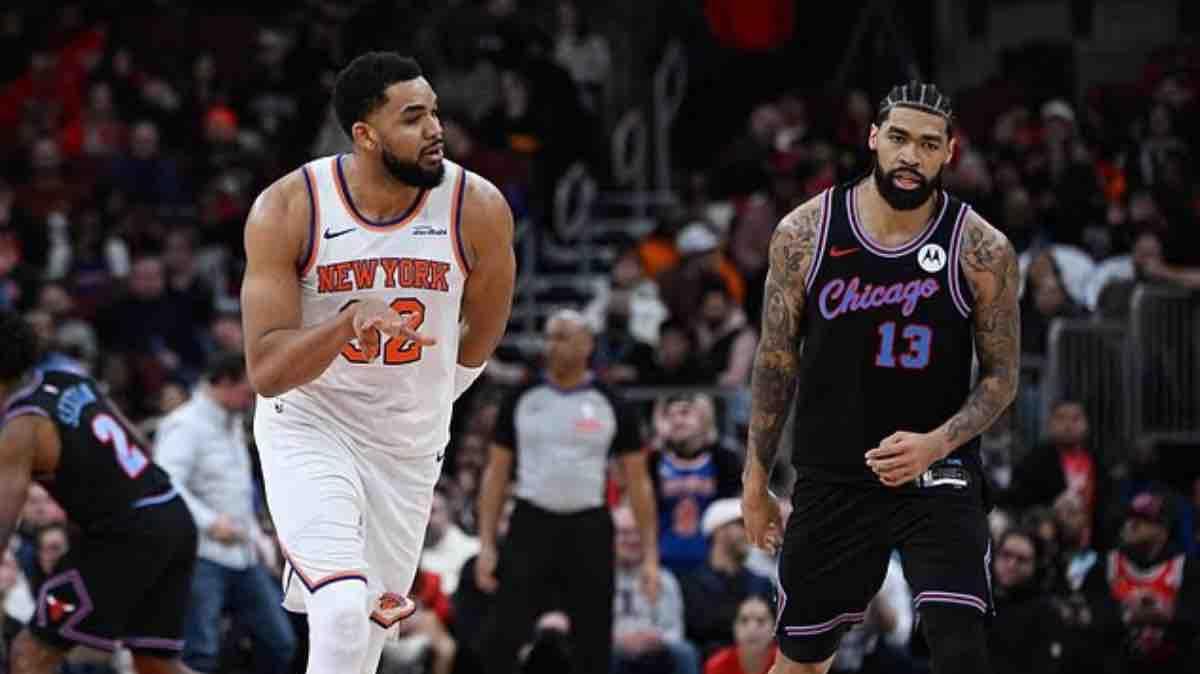
The New York Knicks host the Chicago Bulls with a chance to return to .500, but their previous meeting offers a warning against complacency. Chicago pushed the defending champions into a difficult comeback last week, showing why its poor record should not dictate New York’s approach.
The Knicks enter at 3–4, while the Bulls arrive at Madison Square Garden with a 1–6 record and five consecutive losses. On paper, the matchup favors New York. On the court, Mike Brown’s team still needs to demonstrate that it can control a game before the fourth quarter.
Chicago’s defensive struggles create an opportunity. The Bulls are allowing 128.8 points per game, with opponents shooting close to 40 percent from three-point range. Their opening stretch has included defeats by 19, 35 and 43 points, illustrating how quickly games have slipped away.
For the Knicks, the challenge is turning those weaknesses into quality possessions. Moving the ball, attacking defensive gaps and finding open shooters should produce better results than settling for difficult attempts simply because Chicago has struggled to get stops.
The previous meeting remains relevant. New York needed to erase a 19-point deficit before securing a 133–127 victory at the United Center. That game came on the second night of a back-to-back, but the circumstances do not remove the lesson: giving a young opponent confidence can make an apparently favorable matchup considerably harder.
Caleb Wilson is one reason the Bulls remain capable of creating problems. The fourth overall pick in the 2026 NBA Draft has provided athleticism, energy and a promising foundation for Chicago’s rebuilding project. His decision-making and shooting remain areas for development, but his activity can punish opponents who lose track of cutters or fail to finish defensive possessions.
New York should make Wilson work against an organized defense rather than allowing him easy opportunities in transition. Matching his effort will matter as much as accounting for his physical tools.
Chicago also needs more consistent production from Josh Giddey and Matas Buzelis. Giddey’s scoring has fallen from roughly 17 points per game last season to nine, while his field-goal percentage sits below 37 percent. Buzelis has likewise struggled to turn his potential into dependable nightly output.
Those difficulties have complicated the early work of head coach Thiago Splitter. A young roster needs room to develop, but poor execution can compound quickly when defensive mistakes are followed by rushed offensive possessions.
Norman Powell gives Chicago an experienced scoring option and remains a player New York must take seriously. His ability to generate offense can keep the Bulls competitive even when the rest of their attack becomes uneven. The Knicks cannot assume that Chicago’s broader struggles will prevent its veteran scorer from finding a rhythm.
For Brown, the priority should be establishing clear defensive responsibilities from the opening minutes. Containing drives, securing rebounds and avoiding unnecessary turnovers would reduce the chances of another game turning into a recovery mission.
The Knicks have enough offensive options to test Chicago in different ways. Jalen Brunson can initiate the attack, Karl-Anthony Towns can contribute as both a scorer and passer, and the reserves can provide additional shooting and creation. The task is connecting those strengths rather than relying on one player to rescue stagnant possessions.
A victory would move New York to 4–4, but the performance matters alongside the result. After another uneven outing against Brooklyn, this is an opportunity to show greater consistency across all four quarters.
Chicago’s record makes the Knicks the logical favorite. Last week’s close encounter makes a focused start essential.
Other news - New York Knicks









Other news
- 09:14 NYCFC Face Five Absences Ahead of Montréal Clash as O’Neill Remains a Doubt
- 09:09 Knicks Fall to 76ers 98–93 in NBA Cup Opener
- 14:00 Etihad Park Could Transform NYCFC Matchdays: What Fans Should Watch Next
- 13:00 NYCFC vs. Montréal: Three Questions That Could Shape New York’s Next Test
- 05:00 NYCFC Won Against Atlanta, but the Late Equalizer Still Deserves Attention
- 04:00 Nicolás Fernández Mercau Gives NYCFC a Crucial Set-Piece Option
- 03:00 Matt Freese Kept NYCFC in Contention Before Traoré Stole the Headlines
- 02:30 Knicks Trade Proposal Swaps Karl-Anthony Towns for Bam Adebayo
- 02:00 Alonso Martínez Injury Concern Forces NYCFC to Consider Its Attacking Alternatives
- 01:30 Knicks Expected to Decline Pacome Dadiet’s $5.37 Million Option: What It Means
- 01:00 NYCFC’s Playoff Hopes Survive: Why the Final Two Games Still Require Help
- 00:01 New York City FC Announces 2027 MLS Sprint Season Schedule
- 23:39 Bénie Traoré Delivers for NYCFC: Can His Stunning Winner Become a Turning Point?
- 09:00 NYC Marathon Preparations Accelerate as NYPD Announces Major Security Operation
- 08:46 Traoré’s Stoppage-Time Stunner Keeps NYCFC’s Playoff Hopes Alive
- 08:00 Brunson Scores 38 as Knicks Erase 19-Point Deficit to Beat Bulls
- 19:00 NYCFC vs Atlanta United: Five Signs That Would Show Real Progress
- 18:00 Has NYCFC Lost Its Identity? The Questions Behind a Difficult Season
- 17:24 Mikal Bridges Delivered From Deep While Jalen Brunson Found Another Way to Score
- 17:00 What Should NYCFC Prioritize When Planning Its Next Squad?
- 16:00 Which NYCFC Players Have the Most to Prove Before the Season Ends?
- 15:00 Three Games Left: What Would a Meaningful Finish Look Like for NYCFC?
- 14:00 Who Will Take Responsibility When NYCFC Needs It Most?
- 13:00 Why NYCFC Must Improve Its Management of Winning Positions
- 12:00 NYCFC vs Atlanta United Preview: New York Faces a Crucial Test as Time Runs Out
- 08:12 Karl-Anthony Towns Delivers a 27-Point, 20-Rebound Statement as Knicks Finally Win
- 05:00 Matt Freese’s Availability Could Shape NYCFC’s Final Stretch
- 04:00 Atlanta United Is Struggling Too—But NYCFC Cannot Afford Complacency
- 03:00 Four Home Wins: Why NYCFC Must Give Its Fans Something Back
- 02:00 What NYCFC Must Learn From Its Previous Atlanta United Disappointment
- 01:00 NYCFC Is Fighting to Avoid an Unwanted Place in Club History
- 00:01 Can NYCFC Still Reach the Playoffs? The Challenge Facing the Boys in Blue
- 22:30 NYCFC vs Atlanta United: A Must-Win Game for More Than Just the Playoffs
- 22:04 If Tomás Romero Starts, NYCFC Must Give Him Better Protection
- 21:37 NYCFC Faces Atlanta United With More Than Playoff Hopes on the Line
- 21:07 Karl-Anthony Towns Is Giving the Knicks a Reason to Rethink Their Offense
- 18:00 NYCFC Faces Matt Freese Injury Concern at a Crucial Moment
- 17:00 Tyler Kolek Gave the Knicks Nine Reasons to Look Again—But One Big Question Remains
- 16:00 NYCFC’s Next Transfer Window Should Start With These Three Questions
- 15:00 NYCFC II’s Playoff Exit Leaves a Bigger Question About the Club’s Future
- 14:00 NYCFC and the Red Bulls Have Another Battle Beyond Derby Day
- 13:00 The Costly Mistakes NYCFC Can No Longer Afford
- 09:00 Jalen Brunson Owns Late Mistakes as Knicks’ Shooting Woes Deepen
- 07:57 Harry Kane Wins the 2026 Ballon d’Or Ahead of Mbappé and Lamine Yamal
- 03:00 Jalen Brunson Takes Responsibility as Knicks’ Winless Start Exposes Costly Problems
- 02:00 Andrés Perea Offered NYCFC a Lifeline—Can the Midfield Deliver More?
- 01:00 NYCFC vs. Atlanta United: Three Questions That Could Define a Crucial Night
- 00:05 James Sands’ Message Highlights What NYCFC Need Under Pressure
- 23:00 NYCFC’s Attacking Problem Goes Beyond Missed Chances
- 22:30 Mitchell Robinson Sends Andre Drummond a Message After Knicks Benching
- 22:00 Pascal Jansen Faces NYCFC’s Biggest Question: Why Has Progress Stalled?
- 21:34 NYCFC’s Playoff Hopes Are Fading—Here’s What Must Change Now
- 21:31 Knicks’ Nightmare Start Deepens as Wagner’s Fourth-Quarter Explosion Sends Champions to 0-3