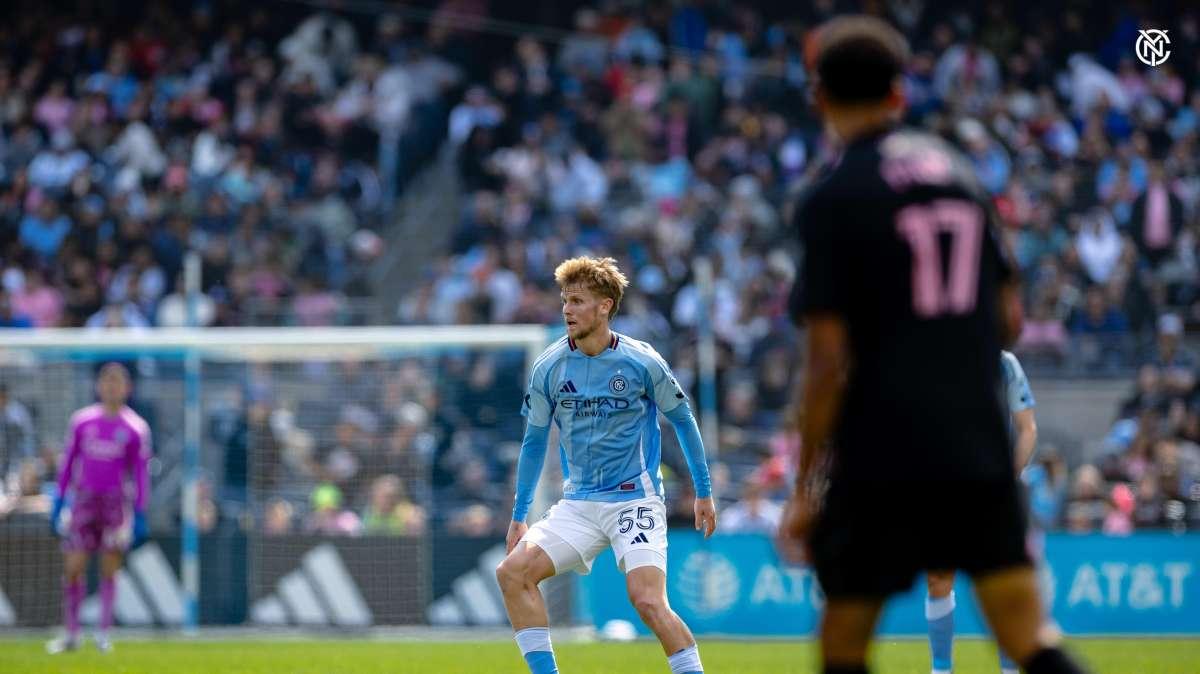
On the surface, the clash between New York City FC and Vancouver Whitecaps appears balanced—not just in the standings, but in structure. Both teams currently sit second in their respective conferences, and both rely on similar tactical frameworks. Yet, beneath that symmetry lies a fascinating contrast in interpretation.
Football often proves that systems alone do not define teams. It is how those systems are applied—and by whom—that ultimately shapes identity.
Same Structure, Different Interpretation
Under Jesper Sørensen, Vancouver has shown tactical flexibility. While his early approach leaned heavily on a classic 4-3-3, recent adjustments have seen a shift toward a 4-2-3-1 or a more cautious variation of the same base system. Regardless of the formation on paper, the structure consistently revolves around a midfield triangle, with one advanced player operating ahead of two deeper midfielders.
A similar approach can be seen in Pascal Jansen’s setup at NYCFC. The Dutch coach also builds his system around a central playmaker, using positional discipline behind the ball and creativity in front of it to control matches.
This shared blueprint creates a sense of familiarity between the two sides. But the execution tells a different story.
The Role That Changes Everything
The most intriguing difference lies in the identity of the advanced midfielder—the player tasked with connecting midfield and attack. For NYCFC, that role belongs to Maxi Moralez, a traditional playmaker who thrives on controlling tempo, orchestrating movement, and dictating the rhythm of the game.
In contrast, Vancouver often relies on Thomas Müller in that same position. However, Müller interprets the role in a completely different way. Rather than dictating play, he excels at exploiting space, arriving in dangerous areas at precisely the right moment. In German football, this archetype is known as a Raumdeuter—an “interpreter of space.”
This contrast sets the stage for a compelling tactical battle. One player seeks to shape the game through control and distribution, while the other looks to disrupt it through movement and instinct.
As the two teams meet, the outcome may hinge less on formation and more on execution. Will Moralez’s composure and vision allow NYCFC to dictate the tempo? Or will Müller’s spatial awareness create the decisive moments for Vancouver?
In a match where structure mirrors structure, it is individuality that could ultimately make the difference.
Other news - News









Other news
- 19:00 Pascal Jansen’s Ruthless Double Substitution May Have Saved NYCFC’s Season
- 18:00 Has Maxi Moralez Already Played His Final Game for NYCFC?
- 17:00 NYCFC’s Injury Crisis Is Getting Out of Control — Can the Playoff Push Survive?
- 16:00 This One-of-One Knicks Championship Card Could Become a Record-Breaking Collectible
- 15:00 James Sands Is Becoming NYCFC’s Emotional Leader at Exactly the Right Time
- 14:00 Matt Freese’s Incredible Double Save May Have Rescued NYCFC’s Season
- 13:00 NYCFC Makes Bold Move for Alexandru Musi — Is He the Missing Piece in New York’s Attack?
- 07:54 NYCFC Rejects $25 Million for Nico Fernández Mercau: Ambition or a Massive Gamble?
- 13:00 NYCFC's Pressing Game Could Be the Key to a Deep Leagues Cup Run
- 11:57 Sergi Roberto Makes MLS Move Official: Barcelona Icon Joins LA Galaxy in Major Coup
- 21:00 NYCFC's Squad Depth Is Becoming a Serious Weapon in the Leagues Cup
- 19:00 NYCFC's Young Stars Are Stepping Up: Why the Club's Future Has Never Looked Brighter
- 17:30 Matt Freese Proved Again Why He's One of MLS' Elite Goalkeepers Against Santos Laguna
- 16:00 Can NYCFC Win the 2026 Leagues Cup? Why the Dream Suddenly Looks Real
- 14:30 Why Nico Cavallo Could Be NYCFC's Breakout Star of the 2026 Leagues Cup
- 13:00 Is Nico Fernandez Mercau the New Face of NYCFC? Why the Argentine Midfielder Is Becoming the Club's Biggest Star
- 00:05 NYCFC's Defensive Identity Was the Difference Against Santos Laguna
- 23:31 Sergi Roberto Set for MLS Move? Barcelona Legend Edges Closer to LA Galaxy Transfer
- 23:14 Jalen Brunson Proved Carmelo Anthony Wrong: One Contract Decision Changed Knicks History Forever
- 22:49 Is Pascal Jansen Transforming NYCFC? A Tactical Breakdown of the Club's New Identity
- 08:19 New York City FC Makes a Statement in Leagues Cup Opener: Gray, Cavallo and Freese Shine in Dominant Victory
- 20:00 Is Matt Freese One of MLS' Best Goalkeepers? Why NYCFC's No. 1 Is Earning League-Wide Respect
- 19:00 Can Maxi Moralez Still Make the Difference? Why the NYCFC Legend Remains Vital to the Club's Future
- 18:00 5 Players New York City FC Should Still Sign Before the Transfer Window Closes
- 18:00 Who Will Finish as NYCFC's Top Scorer? Julián Fernández, Alonso Martínez or Hannes Wolf?
- 17:00 NYCFC vs New York Red Bulls: Who Really Owns New York Soccer?
- 16:00 Etihad Player of the Month | Perea Scoops July Award
- 15:00 Can NYCFC Finally Win MLS Cup Again? Five Reasons the Boys in Blue Can Go All the Way in 2026
- 14:00 NYCFC Academy Is Producing the Next Generation: Meet the Young Stars Ready for the First Team
- 08:48 New York City FC Forward Arnau Farnós Undergoes Surgery
- 23:00 Ranking the 10 Greatest Players in New York City FC History: Who Is the Club's True GOAT?
- 22:00 NYCFC's Remaining Schedule: The Seven Matches That Could Define the Boys in Blue's Playoff Destiny
- 21:00 MLS Power Rankings: Where Does NYCFC Really Stand After the World Cup Break?
- 20:00 Christian Pulisic to NYCFC? Separating Fact From Fiction as the Transfer Rumors Grow
- 19:00 Etihad Park Is Changing Everything: How NYCFC’s New Stadium Will Transform the Club Forever
- 18:00 Malachi Jones Is NYCFC’s Next Superstar: Why the Young Winger Is Ready for a Breakout Season
- 17:00 Nicolás Fernández Mercau Is Becoming NYCFC’s Biggest Star—and MLS Is Starting to Notice
- 16:00 NYCFC Still Needs One More Star: Why the Attack Isn't Complete Yet
- 15:00 Why NYCFC Has Built One of MLS's Best Midfields in 2026
- 15:00 NYCFC’s Best Starting XI: The Lineup That Could Lead the Boys in Blue to MLS Cup Glory
- 14:00 Leagues Cup 2026: Can NYCFC Survive the Group of Death? Complete Breakdown of Every Opponent
- 14:00 Is Matt Freese the Best Goalkeeper in MLS? Why NYCFC’s No. 1 Is Changing the Conversation
- 13:00 James Sands Is Back: Why His Return Could Be NYCFC’s Biggest Signing of the Season SEO Key Phrase:
- 12:00 NYCFC Injury Report: Every Key Player's Return Date and What It Means for the Rest of the Season
- 11:00 Pascal Jansen Has Changed Everything: Inside the Tactical Revolution Transforming NYCFC in 2026
- 10:00 Can NYCFC Really Win the Leagues Cup? Breaking Down Every Obstacle Standing in Their Way
- 09:00 NYCFC Transfer News: Five Signings That Could Turn the Boys in Blue Into MLS Cup Favorites
- 08:18 NYCFC’s Defining Month Has Arrived: Can the Boys in Blue Survive a Brutal August Schedule?
- 17:30 Did Pascal Jansen Overthink It? NYCFC's Tactical Gamble Backfired Against Toronto
- 16:00 Does NYCFC Need Another Left Winger? Why One More Creative Attacker Could Unlock the Entire Offense
- 14:30 NYCFC vs. Toronto FC: Did the Referee Take Control Away From Both Teams?
- 13:00 NYCFC Needs Defensive Reinforcements: Why a Left-Footed Center Back Could Be the Club's Smartest Signing
- 08:12 Gio Reyna's Career Gets a Fresh Start: Why Strasbourg Could Be the Move That Revives the USMNT Star