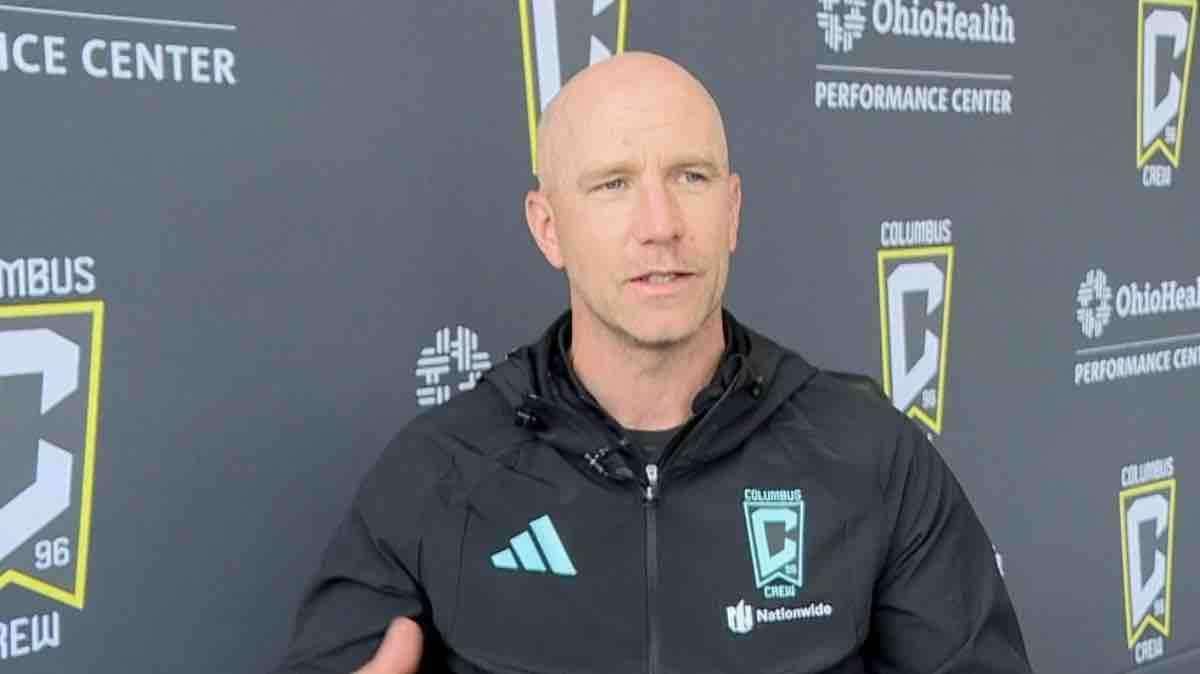
Columbus Crew arrive at Yankee Stadium with a familiar badge but a different tactical personality. The offseason departure of Wilfried Nancy forced the club into a major coaching transition, and the appointment of Henrik Rydström has already begun to reshape the way Columbus approach matches.
Rydström, hired on December 31 after an impressive spell in Sweden with Malmö, brought strong credentials with him. During his two years in charge, he guided Malmö to back-to-back Allsvenskan titles in 2023 and 2024, building a reputation as a coach who values possession, control and intelligent attacking structure.
But his arrival has not meant simply copying what worked before.
Columbus had become widely associated with a back-three system under Nancy, a setup that helped define their rhythm and identity. Rydström has moved the Crew toward a 4-4-2, a formation that better reflects his own footballing ideas and offers different ways to stretch opponents.
Former NYCFC defender Malte Amundsen described the adjustment as “evolution not revolution,” a phrase that captures the balance Columbus are trying to strike. The Crew are not abandoning their possession principles, but they are trying to become less predictable.
Rydström brings a new tactical identity to Columbus Crew
Rydström’s vision is built around control, but not sterile possession. He has made it clear that he wants his team to dominate the ball without falling into the trap of playing too slowly or too safely.
His comments during preseason offered a clear look into that mindset. The Columbus coach explained that directness does not mean becoming a counterattacking team. Instead, he wants his players to recognize moments when they can advance quickly, carry the ball forward and put pressure on the opponent’s penalty area.
That distinction is important.
Columbus still want to have the ball, but Rydström is encouraging more vertical intent. Rather than relying only on sideways passing or patient circulation, the Crew are being asked to mix possession with aggressive running, sharper forward passes and quicker attacks when space appears.
The shift to a 4-4-2 supports that idea. It can provide compactness without the ball, clearer forward partnerships in attack and natural wide outlets when Columbus look to progress. It also gives the Crew more flexibility to press, defend in two banks, or spring forward when opponents lose structure.
Why NYCFC must prepare for a more direct and flexible Columbus side
For Pascal Jansen and New York City FC, this presents a fascinating tactical test.
NYCFC cannot prepare only for the Columbus team of previous seasons. The Crew may still value possession, but they are now more willing to change rhythm and attack earlier if the opportunity is there. That ability to alternate between patience and sudden acceleration can create problems for opponents who lose concentration.
The key for NYCFC will be recognizing when Columbus are trying to lure them forward and when they are preparing to break lines. If New York press too aggressively without balance, Rydström’s side could find space behind the midfield. If NYCFC sit too deep, Columbus may be able to control territory and dictate the tempo.
That balance will define the matchup.
Jansen’s players must stay compact, communicate well and avoid being pulled out of shape by Columbus’ possession sequences. At the same time, they will need to be brave enough to disrupt the Crew before their attacking structure settles.
This is not just another MLS game between two Eastern Conference teams. It is a meeting between two coaches trying to impose clear identities, with Rydström’s tactical changes giving Columbus a fresh edge.
For NYCFC, the challenge is obvious: stop Columbus from turning controlled possession into dangerous forward momentum. If they fail, Rydström’s new-look Crew could make Yankee Stadium a very uncomfortable place.
Other news - News









Other news
- 22:13 NYCFC's Citi Field Nightmare: Why New York Cannot Win at Home
- 20:11 Andrés Perea Saves NYCFC With Crucial Goal Against LAFC
- 19:22 Pascal Jansen Under Pressure as NYCFC's Playoff Hopes Fade
- 15:42 NYCFC Playoff Crisis: Four Games Left to Save the Season
- 14:25 NYCFC vs LAFC 1-1: Perea Saves New York in Dramatic Draw
- 00:12 Son and Bouanga vs NYCFC: Can New York Stop LAFC's Stars?
- 23:13 NYCFC Needs Nico Fernández Mercau to Save Its Playoff Dream
- 23:10 NYCFC vs LAFC: Is New York's Playoff Dream on the Line?
- 22:00 NYCFC’s Post-World Cup Challenge Could Shape Its Future
- 21:21 Knicks Start 0-3: Should Fans Worry About the Real Warning Signs?
- 20:30 Etihad Park Opening Date: NYCFC’s New Era Starts Here
- 19:00 NYCFC Schedule Shake-Up: Three Big Dates Fans Must Know
- 17:30 Luighi’s NYCFC Future: The Clause That Could Change Everything
- 16:00 Fernández Mercau Gives NYCFC a Weapon Defenses Cannot Ignore
- 14:30 Agustín Ojeda’s Assist Surge Reveals NYCFC’s Creative Weapon
- 13:00 Luighi Wins Again: NYCFC’s Rising Forward Makes His Case
- 07:00 Alonso Martínez Returns—and NYCFC Face a Big Attack Decision
- 07:58 Carles Gil and Peyton Miller: New England’s Duo to Watch Before the Playoffs
- 02:30 Cavan Sullivan’s MLS Rise: Is Philadelphia’s Young Star Ahead of Schedule?
- 01:30 Luighi Wins Again: Is NYCFC’s Next Attacking Star Emerging?
- 00:30 NYCFC vs. Red Bull in the Playoffs? A New York Derby With Everything to Lose
- 23:30 Lewandowski vs. Müller: A Bayern Reunion With Huge MLS Stakes
- 23:00 Nashville SC Could Break Messi’s Miami Record—But There’s a Catch
- 22:57 Messi’s MLS MVP Three-Peat: Can Anyone Stop Him in 2026?
- 22:51 Luighi Does It Again: NYCFC Forward Claims Another Monthly Award
- 17:00 Playoff Math: What NYCFC Needs to Do Down the Stretch
- 15:00 The Botafogo Connection: How a Brazilian Club's Debts Are Funding NYCFC's Business
- 13:00 Is Hannes Wolf's Time in New York Coming to an End?
- 21:00 The Shift: How NYCFC Snapped Out of Its Funk in Salt Lake City
- 18:57 Six Games Left: NYCFC's Rendezvous With Destiny at Yankee Stadium
- 15:30 The Quiet Architect: Agustín Ojeda's Fingerprints All Over NYCFC's Win
- 14:30 From Disappointment to Dominance: How NYCFC Answered Their Midweek Setback
- 13:30 The Wall: Matt Freese's Masterclass Anchors NYCFC's Win Over Real Salt Lake
- 12:30 The Hero Returns: Alonso Martínez Back on the Pitch as NYCFC Beats Real Salt Lake
- 11:28 New York City FC Grind Out 2-0 Win at Real Salt Lake Despite Slow Start
- 18:00 NYCFC Turn Their Focus to New England: What Must Improve After Nashville?
- 16:30 Can NYCFC Keep Competing Until Moralez, Parks and Hannes Wolf Return?
- 15:00 NYCFC 0-0 Nashville: One Point Gained or Two Points Lost?
- 21:30 NYCFC Defend With Character, but the Attack Still Needs More Ruthlessness
- 20:00 Aiden O’Neill Makes His Mark for NYCFC: A Valuable Defensive Option for Pascal Jansen
- 18:30 NYCFC Show Their Depth: Seven Players Missing, Yet Another Clean Sheet
- 17:00 Pascal Jansen’s NYCFC Rotation Worked Defensively — But Questions Remain in Attack
- 15:30 Nico Fernández Mercau Sets the Tone: Why His Pressing Is Crucial for NYCFC
- 14:00 Bénie Traoré and Luighi Show Early Chemistry: NYCFC’s New-Look Attack Is Taking Shape
- 23:00 Luighi’s Next Step at NYCFC: From Rising Star to Consistent MLS Threat
- 22:00 Raul Gustavo’s Costly Scare: What NYCFC Must Learn From the Mukhtar Chance
- 21:00 Malachi Jones Nearly Wins It for NYCFC: Has He Earned More Minutes?
- 20:00 Agustín Ojeda Shines for NYCFC: Is a Breakout Run About to Begin?
- 19:00 NYCFC’s Biggest Problem Is Clear: Who Is Going to Score the Goals?
- 18:00 Matt Freese Saves NYCFC Again: Is He Becoming the Team’s Most Important Player?
- 17:28 NYCFC Held to 0-0 Draw by Nashville SC at Yankee Stadium