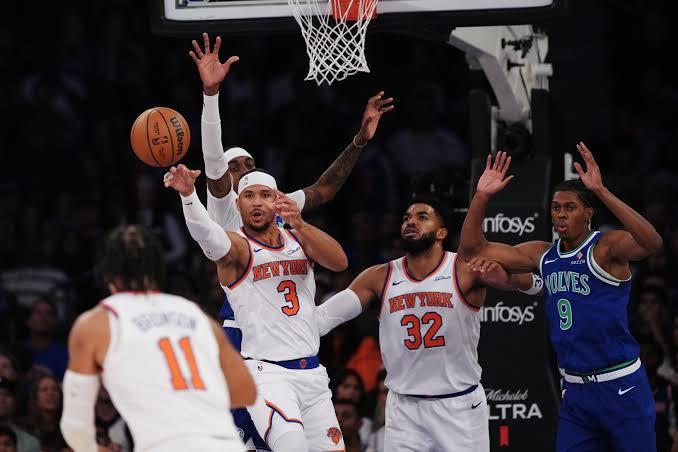
The New York Knicks are defending champions, but their opening preseason performances have offered little reason to celebrate.
A 122-104 loss to the Minnesota Timberwolves dropped New York to 0-3, extending a difficult start that has raised questions about the team’s readiness. Against Minnesota, each starter played approximately 22 minutes, meaning the performance cannot be dismissed entirely as the product of experimental bench lineups.
Still, three exhibition defeats are not enough to predict how a season will unfold. The more useful question is which problems reflect preseason preparation—and which deserve closer attention.
Concern is reasonable. Panic is premature.
Why the Knicks’ Preseason Record Needs Context
Preseason serves several purposes beyond winning. Coaches evaluate combinations, manage workloads and give players opportunities to operate in unfamiliar situations.
Mike Brown has added another element to that process. He explained that he is deliberately keeping the offense relatively simple to challenge his players’ decision-making.
That matters when assessing New York’s offensive rhythm. An intentionally limited approach may expose weaknesses without showing the full range of solutions the coaching staff could use during the regular season.
The approach does not make poor execution irrelevant. Players still need to recognize advantages, move with purpose and avoid unnecessary mistakes. It does, however, provide a reason to resist treating every stalled possession as evidence of a lasting tactical problem.
Cold Shooting Is Frustrating, but Shot Quality Matters More
The Knicks shot 45.5% from the field and 25% from three-point range against Minnesota. Those percentages contributed to another disappointing offensive night.
A small sample of poor shooting requires careful interpretation. Good shooters can miss open attempts during a short stretch, and improved results may follow without a dramatic change in personnel or strategy.
The distinction is between missed opportunities and poorly constructed possessions.
If New York are creating balanced, uncontested shots after moving the defense, patience is justified. If possessions repeatedly end with difficult attempts because the ball stops moving, the issue requires more than waiting for percentages to recover.
For that reason, the next few performances should be judged partly by the opportunities the Knicks generate, rather than solely by how many shots fall.
Defense and Rebounding Deserve Closer Attention
The more significant Knicks preseason concerns involve their ability to defend possessions completely. New York’s struggles against Minnesota included rebounding, even with the starters involved.
My assessment is that these areas warrant more attention than the winless record itself.
A defensive possession requires several connected actions: containing the initial attack, providing timely help, recovering to shooters and securing the rebound. A breakdown at any stage can undo the work that came before it.
Improved shooting would help the scoreboard. It would not automatically correct missed assignments or prevent opponents from earning second chances.
The Knicks need to show progress in those details as their preparation continues.
The Starters’ Minutes Are the Most Useful Test
Final preseason scores can be influenced heavily by combinations that will rarely appear once the regular season begins.
That makes the performance of the main rotation particularly valuable to examine. When New York’s established players share the floor, are their defensive responsibilities clear? Does the offense produce useful movement away from the ball? Can they respond to an opponent’s run without losing organization?
Those questions offer a better measure of readiness than demanding an exhibition victory at any cost.
A loss accompanied by sharper execution could provide encouragement. A win built on difficult shots while the same defensive mistakes continue would offer less reassurance.
Contract Frustration Should Not Become an Automatic Explanation
It is tempting to connect an unsettled performance with every off-court storyline surrounding a team.
That temptation should be resisted. Contract discussions and player frustration may attract attention, but attributing missed rotations or poor shooting to those issues requires evidence.
The basketball analysis should begin with what can be observed: positioning, decisions, effort and execution.
Keeping those categories separate allows a fairer assessment of both the players and the coaching staff.
When Should Knicks Fans Become Genuinely Worried?
The threshold for concern should rise if the same problems persist when workloads increase, the rotation becomes more settled and regular-season competition begins.
Repeated defensive confusion would matter. An inability to finish stops with rebounds would matter. An offense that struggles to create good opportunities despite using its normal personnel would also deserve scrutiny.
For now, the Knicks have identified work to do rather than established a ceiling on their season.
Fans should expect a response in the quality of play. Better communication, more complete defensive possessions and clearer offensive decisions would provide stronger reassurance than simply removing the zero from the preseason win column.
Other news - New York Knicks







Other news
- 22:00 NYCFC’s Post-World Cup Challenge Could Shape Its Future
- 21:21 Knicks Start 0-3: Should Fans Worry About the Real Warning Signs?
- 20:30 Etihad Park Opening Date: NYCFC’s New Era Starts Here
- 19:00 NYCFC Schedule Shake-Up: Three Big Dates Fans Must Know
- 17:30 Luighi’s NYCFC Future: The Clause That Could Change Everything
- 16:00 Fernández Mercau Gives NYCFC a Weapon Defenses Cannot Ignore
- 14:30 Agustín Ojeda’s Assist Surge Reveals NYCFC’s Creative Weapon
- 13:00 Luighi Wins Again: NYCFC’s Rising Forward Makes His Case
- 07:00 Alonso Martínez Returns—and NYCFC Face a Big Attack Decision
- 07:58 Carles Gil and Peyton Miller: New England’s Duo to Watch Before the Playoffs
- 02:30 Cavan Sullivan’s MLS Rise: Is Philadelphia’s Young Star Ahead of Schedule?
- 01:30 Luighi Wins Again: Is NYCFC’s Next Attacking Star Emerging?
- 00:30 NYCFC vs. Red Bull in the Playoffs? A New York Derby With Everything to Lose
- 23:30 Lewandowski vs. Müller: A Bayern Reunion With Huge MLS Stakes
- 23:00 Nashville SC Could Break Messi’s Miami Record—But There’s a Catch
- 22:57 Messi’s MLS MVP Three-Peat: Can Anyone Stop Him in 2026?
- 22:51 Luighi Does It Again: NYCFC Forward Claims Another Monthly Award
- 17:00 Playoff Math: What NYCFC Needs to Do Down the Stretch
- 15:00 The Botafogo Connection: How a Brazilian Club's Debts Are Funding NYCFC's Business
- 13:00 Is Hannes Wolf's Time in New York Coming to an End?
- 21:00 The Shift: How NYCFC Snapped Out of Its Funk in Salt Lake City
- 18:57 Six Games Left: NYCFC's Rendezvous With Destiny at Yankee Stadium
- 15:30 The Quiet Architect: Agustín Ojeda's Fingerprints All Over NYCFC's Win
- 14:30 From Disappointment to Dominance: How NYCFC Answered Their Midweek Setback
- 13:30 The Wall: Matt Freese's Masterclass Anchors NYCFC's Win Over Real Salt Lake
- 12:30 The Hero Returns: Alonso Martínez Back on the Pitch as NYCFC Beats Real Salt Lake
- 11:28 New York City FC Grind Out 2-0 Win at Real Salt Lake Despite Slow Start
- 18:00 NYCFC Turn Their Focus to New England: What Must Improve After Nashville?
- 16:30 Can NYCFC Keep Competing Until Moralez, Parks and Hannes Wolf Return?
- 15:00 NYCFC 0-0 Nashville: One Point Gained or Two Points Lost?
- 21:30 NYCFC Defend With Character, but the Attack Still Needs More Ruthlessness
- 20:00 Aiden O’Neill Makes His Mark for NYCFC: A Valuable Defensive Option for Pascal Jansen
- 18:30 NYCFC Show Their Depth: Seven Players Missing, Yet Another Clean Sheet
- 17:00 Pascal Jansen’s NYCFC Rotation Worked Defensively — But Questions Remain in Attack
- 15:30 Nico Fernández Mercau Sets the Tone: Why His Pressing Is Crucial for NYCFC
- 14:00 Bénie Traoré and Luighi Show Early Chemistry: NYCFC’s New-Look Attack Is Taking Shape
- 23:00 Luighi’s Next Step at NYCFC: From Rising Star to Consistent MLS Threat
- 22:00 Raul Gustavo’s Costly Scare: What NYCFC Must Learn From the Mukhtar Chance
- 21:00 Malachi Jones Nearly Wins It for NYCFC: Has He Earned More Minutes?
- 20:00 Agustín Ojeda Shines for NYCFC: Is a Breakout Run About to Begin?
- 19:00 NYCFC’s Biggest Problem Is Clear: Who Is Going to Score the Goals?
- 18:00 Matt Freese Saves NYCFC Again: Is He Becoming the Team’s Most Important Player?
- 17:28 NYCFC Held to 0-0 Draw by Nashville SC at Yankee Stadium
- 18:30 NYCFC Need Their Identity Back: What Happened to the Aggressive, Fearless Team Fans Expected?
- 17:00 What Should NYCFC’s Real Goal Be Now: MLS Cup, a Playoff Run or Building for 2027?
- 15:30 Nashville and New England Could Define NYCFC’s Season — The Next Two Games Suddenly Feel Massive
- 14:00 Can NYCFC’s Young Core Carry the Club Into Its Next Era?
- 20:00 NYCFC’s Next Transfer Window Could Define the Future: Three Positions New York Must Reinforce
- 18:30 Is Pascal Jansen Building the Right NYCFC for the Future? The Answer Is Still Complicated
- 17:00 NYCFC Need a Killer Instinct: Good Performances Are No Longer Enough
- 15:30 From MLS Cup Dreams to Playoff Anxiety: Where NYCFC Really Stand Right Now
- 14:00 Can NYCFC Still Win MLS Cup in 2026? Five Reasons to Believe — and Five Reasons to Worry