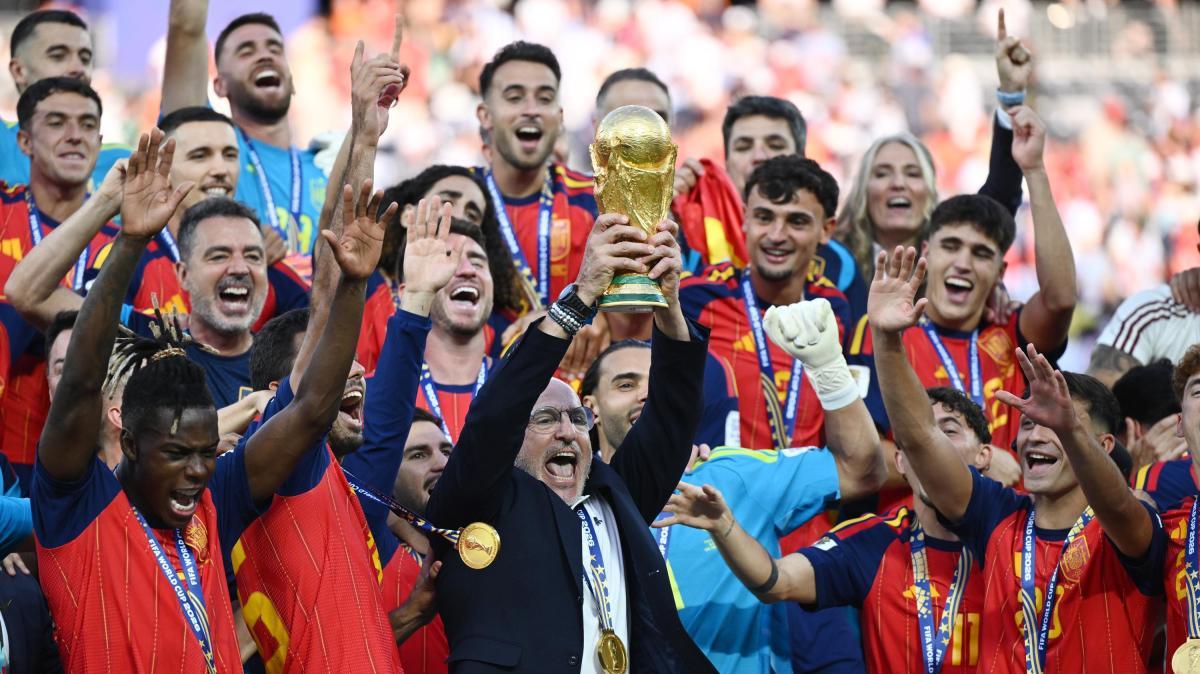
Spain completed a tournament-defining performance to claim the World Cup, producing a level of dominance that rarely conceded momentum to Argentina. From the opening whistle the Roja dictated tempo, probing patiently through midfield and testing Emiliano Martínez repeatedly. Only after 120 gruelling minutes did Ferran Torres deliver the decisive blow, a clinical finish in the 106th minute that crowned Luis de la Fuente’s team champions.
Spain’s control from whistle to whistle
The match unfolded as a study in possession football. Spain’s midfield nucleus—Rodri, Fabián Ruiz and Dani Olmo—controlled the ball’s circulation and tempo, forcing Argentina into a reactive posture and waiting to pounce on chances from transitions. Early on, chances flowed Spain’s way: a sharp one-two between Yamal and Dani Olmo produced the first real scare, and Unai Simón’s brave rush to cut out a Messi through-ball underlined Spain’s intent to dominate not only with passing but also with timely aggression. Argentina, coached by Lionel Scaloni, preferred compact defending and counterattacks, banking on Emiliano Martínez to keep them afloat. The physical toll of that approach quickly showed: Lisandro Martínez’s injury and Romero’s later withdrawal disrupted their backline continuity, and Enzo Fernández’s dismissal deep in stoppage time of the second half left Argentina with a numerical disadvantage that proved decisive.
Extra-time drama and the moment that decided the final
Despite Argentina’s resilience, Spain’s persistence paid off in extra time. The match’s defining moment arrived when Nico Williams—whose energy had repeatedly punctured Argentina’s shape—fed Ferran Torres in the box. Torres’s instinctive poacher’s finish at 106’ found the net and finally split a game defined by narrow margins and brilliant goalkeeping. A disallowed Nico Williams’ goal and a later ruled-out Torres strike kept the tension high, but the first legitimate goal was enough to make history. Spain’s goal was not a fluke; it was the culmination of pressure, quality service into the penalty area, and clinical execution when the moment demanded courage and composure.
What this victory means
This triumph rewards De la Fuente’s tactical identity—a side built on control, technical mastery, and intelligent rotation—while exposing the vulnerability of Argentina’s otherwise gifted unit when forced into a defensive posture for extended periods. For Spain, Ferran Torres’ finish will be replayed for decades: a moment that joins the pantheon of iconic World Cup winners. For Argentina, the loss is bitter but instructive: Scaloni’s team showed grit and moments of individual brilliance, yet could not counteract Spain’s superior ball progression and tactical cohesion.
Tactically, the match reaffirmed that possession with purpose wins out against compact resistance when a team can sustain territorial pressure and convert fine margins into goals. Spain’s midfield orchestration, the tireless wing play that created overloads, and Ferran Torres’ striker’s instinct combined to produce a deserved global title.
Other news - Focus







Other news
- 18:00 NYCFC Turn Their Focus to New England: What Must Improve After Nashville?
- 16:30 Can NYCFC Keep Competing Until Moralez, Parks and Hannes Wolf Return?
- 15:00 NYCFC 0-0 Nashville: One Point Gained or Two Points Lost?
- 21:30 NYCFC Defend With Character, but the Attack Still Needs More Ruthlessness
- 20:00 Aiden O’Neill Makes His Mark for NYCFC: A Valuable Defensive Option for Pascal Jansen
- 18:30 NYCFC Show Their Depth: Seven Players Missing, Yet Another Clean Sheet
- 17:00 Pascal Jansen’s NYCFC Rotation Worked Defensively — But Questions Remain in Attack
- 15:30 Nico Fernández Mercau Sets the Tone: Why His Pressing Is Crucial for NYCFC
- 14:00 Bénie Traoré and Luighi Show Early Chemistry: NYCFC’s New-Look Attack Is Taking Shape
- 23:00 Luighi’s Next Step at NYCFC: From Rising Star to Consistent MLS Threat
- 22:00 Raul Gustavo’s Costly Scare: What NYCFC Must Learn From the Mukhtar Chance
- 21:00 Malachi Jones Nearly Wins It for NYCFC: Has He Earned More Minutes?
- 20:00 Agustín Ojeda Shines for NYCFC: Is a Breakout Run About to Begin?
- 19:00 NYCFC’s Biggest Problem Is Clear: Who Is Going to Score the Goals?
- 18:00 Matt Freese Saves NYCFC Again: Is He Becoming the Team’s Most Important Player?
- 17:28 NYCFC Held to 0-0 Draw by Nashville SC at Yankee Stadium
- 18:30 NYCFC Need Their Identity Back: What Happened to the Aggressive, Fearless Team Fans Expected?
- 17:00 What Should NYCFC’s Real Goal Be Now: MLS Cup, a Playoff Run or Building for 2027?
- 15:30 Nashville and New England Could Define NYCFC’s Season — The Next Two Games Suddenly Feel Massive
- 14:00 Can NYCFC’s Young Core Carry the Club Into Its Next Era?
- 20:00 NYCFC’s Next Transfer Window Could Define the Future: Three Positions New York Must Reinforce
- 18:30 Is Pascal Jansen Building the Right NYCFC for the Future? The Answer Is Still Complicated
- 17:00 NYCFC Need a Killer Instinct: Good Performances Are No Longer Enough
- 15:30 From MLS Cup Dreams to Playoff Anxiety: Where NYCFC Really Stand Right Now
- 14:00 Can NYCFC Still Win MLS Cup in 2026? Five Reasons to Believe — and Five Reasons to Worry
- 19:00 NYCFC’s Defense Has Talent — So Why Does It Still Look So Vulnerable?
- 17:30 The Keaton Parks Question: Is He Still Essential to NYCFC’s Midfield Future?
- 16:00 Without Alonso Martínez, NYCFC Need a New Source of Goals — Who Is Ready to Step Up?
- 14:30 Luighi’s Big NYCFC Opportunity: Can the Brazilian Prospect Become New York’s Next Starting Striker?
- 13:00 NYCFC’s Five-Game Winless Run Is Becoming a Real Problem — Can Pascal Jansen Fix It Before the Slide Gets Worse?
- 04:00 NYCFC’s Injury Crisis Is Exposing a Bigger Question: Is the Roster Deep Enough to Compete for MLS Cup?
- 03:00 NYCFC Keep Dropping Leads — Is This Becoming a Mental Problem?
- 02:00 Pascal Jansen Under Pressure: Are His In-Game Decisions Costing NYCFC Points?
- 01:00 Matt Freese Keeps Saving NYCFC — But New York Cannot Keep Asking Its Goalkeeper to Rescue Every Game
- 00:01 Nico Fernández Mercau Is Becoming NYCFC’s Most Important Attacking Player
- 23:00 NYCFC Are Sliding at the Worst Possible Time: Five Games Without a Win and the Table Could Turn Ugly
- 22:00 Pascal Jansen’s Risky Substitution Backfired: NYCFC’s Left Side Collapsed Before Toronto’s Equalizer
- 21:00 NYCFC Threw Away Two More Points: This Time Pascal Jansen Has to Share the Blame
- 19:04 NYCFC Let Another Lead Slip: Fernández Mercau Stunner Not Enough to Finish Toronto Job
- 16:00 NYCFC Faces a Season-Defining Night in Toronto: Win or Invite a Playoff Crisis
- 15:00 Etihad Park Installs Its First Seat — NYCFC’s Long-Awaited Home Is Finally Becoming Real
- 14:00 Toronto vs. NYCFC Has Suddenly Become a Must-Win Match for Pascal Jansen
- 13:00 NYCFC’s Playoff Dream Could Be Destroyed by an Unprecedented Injury Emergency
- 19:00 Pascal Jansen’s Ruthless Double Substitution May Have Saved NYCFC’s Season
- 18:00 Has Maxi Moralez Already Played His Final Game for NYCFC?
- 17:00 NYCFC’s Injury Crisis Is Getting Out of Control — Can the Playoff Push Survive?
- 16:00 This One-of-One Knicks Championship Card Could Become a Record-Breaking Collectible
- 15:00 James Sands Is Becoming NYCFC’s Emotional Leader at Exactly the Right Time
- 14:00 Matt Freese’s Incredible Double Save May Have Rescued NYCFC’s Season
- 13:00 NYCFC Makes Bold Move for Alexandru Musi — Is He the Missing Piece in New York’s Attack?
- 07:54 NYCFC Rejects $25 Million for Nico Fernández Mercau: Ambition or a Massive Gamble?