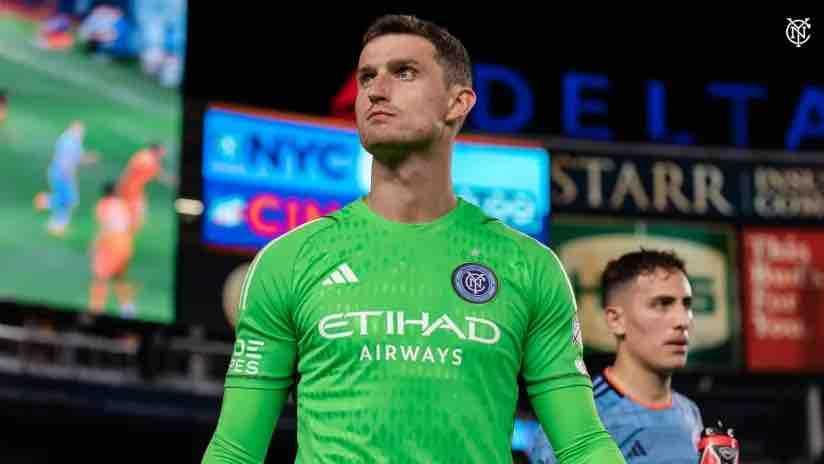
Matt Freese experienced the kind of moment every goalkeeper fears.
For much of the 2026 World Cup, the United States men’s national team starter had looked composed, reliable and increasingly comfortable under pressure. His performances helped the Americans reach the round of 16 with growing confidence and renewed belief that a historic quarterfinal appearance was within reach.
Then came Belgium.
The USMNT’s 4–1 defeat was a collective collapse rather than the responsibility of one player, but Freese became the most visible symbol of the elimination. His mistake shortly before the hour mark gifted Belgium a decisive third goal and transformed a difficult situation into one that felt almost impossible to recover from.
Goalkeepers live with that reality more than any other position. A misplaced pass from a midfielder can be corrected. A missed chance by a striker can be forgotten if another opportunity arrives. When a goalkeeper makes a major error, however, the consequence is immediate and impossible to hide.
Freese was forced to confront that reality on the biggest stage of his career.
Yet instead of avoiding the criticism that followed, the New York City FC goalkeeper has chosen to use it as fuel. The jeers, the hostile reactions and the questions surrounding his mentality have not weakened his ambition.
They have intensified it.
The Mistake Against Belgium That Changed Freese’s World Cup Story
The incident came at a moment when the United States was still searching for a way back into the match.
Belgium had already established control, but the USMNT had not completely surrendered hope. One goal could have changed the emotional direction of the contest and placed pressure on the European side.
Instead, a poor touch from Freese outside his penalty area gave Charles De Ketelaere the opportunity to recover possession. The Belgian forward quickly found Hans Vanaken, who finished into a largely unguarded net.
It was Belgium’s third goal and, psychologically, the decisive blow.
The scoreline suddenly reflected more than Belgium’s superiority. It reflected the collapse of the belief that had carried the Americans through the group stage. Players appeared deflated, supporters were stunned and the possibility of reaching the quarterfinals for the first time since 2002 disappeared rapidly.
Freese’s mistake naturally became the defining image of the defeat.
That assessment was harsh but predictable. Goalkeepers are often judged through isolated moments, especially during knockout football. An otherwise strong tournament can be overshadowed by one poor decision, one heavy touch or one second of hesitation.
Freese had performed solidly before the round of 16. He had shown confidence in possession, commanded his area and handled the pressure of starting for the host nation. None of that prevented the Belgium error from dominating the conversation.
The criticism continued after the tournament.
When Freese returned to MLS duty with New York City FC, opposition supporters at Columbus Crew’s stadium booed him whenever he touched the ball. The reaction demonstrated that the World Cup incident had not yet been forgotten.
For some players, that kind of reception could create anxiety. Every back-pass might feel more dangerous. Every decision could become clouded by the fear of repeating the same mistake.
Freese has chosen to interpret it differently.
Rather than viewing the boos exclusively as hostility, he sees them as evidence that people were emotionally invested in the national team’s journey. The disappointment, in his view, came from expectations.
The supporters believed the United States could achieve something special. Their anger reflected how deeply they cared when that possibility disappeared.
That does not remove the pain of the moment, but it gives Freese a productive way to process it.
Why Criticism Has Become Fuel for the NYCFC Goalkeeper
Freese’s response reveals much about the mentality required to recover from a high-profile mistake.
He has not attempted to minimize what happened. He understands the importance of the error and accepts that supporters were entitled to expect more. At the same time, he refuses to allow one moment to define the direction of his career.
That balance is essential.
Accountability without confidence can become destructive. Confidence without accountability can prevent growth. Freese appears determined to accept responsibility while maintaining the belief that made him the USMNT’s starting goalkeeper in the first place.
“Criticism is part of this job,” Freese told Sports Illustrated during the 2026 MLS All-Star week. He explained that negative reactions can also be interpreted as a sign of emotional investment.
His position is unusual but revealing.
Freese does not welcome abuse, but he understands the pressure attached to representing the United States at a World Cup and playing in one of Major League Soccer’s most demanding markets. He wants to compete at the highest level, and that ambition necessarily brings scrutiny.
The goalkeeper has also connected that pressure to his future goals.
With the national team, he still wants to help the United States become a genuine contender on the international stage. With NYCFC, he wants to compete for the MLS Cup and establish the club among the league’s elite.
Those ambitions require resilience.
A goalkeeper cannot play freely while constantly replaying a previous mistake. The position demands immediate recovery, even when the emotional consequences last much longer. Freese must continue asking for the ball, stepping outside his area and making aggressive decisions despite knowing that another error would attract intense attention.
That is where the boos may actually help him.
Every hostile reaction becomes a reminder of what is at stake. Every difficult away match offers another opportunity to show that he has not been broken by the World Cup experience.
His return to NYCFC therefore represents more than the resumption of a club season. It is the beginning of a personal response.
Freese must rebuild through performances rather than explanations. Strong distribution, decisive interventions and consistent leadership will gradually replace the memory of Belgium. There is no single save capable of erasing the mistake, but a sustained period of excellence can change the way the incident is remembered.
The World Cup defeat may ultimately become a defining chapter rather than a permanent label.
Many top goalkeepers have endured catastrophic errors on major stages. What separates the best is not the absence of failure, but the ability to continue playing with courage after it happens.
Freese’s reaction suggests that he understands this.
He does not want sympathy. He wants another opportunity.
The criticism has not reduced his standards. It has reinforced them. He remains frustrated by losing, determined to repay the supporters and motivated by the idea that pressure is evidence of responsibility.
That mentality will now be tested across the remainder of the MLS season.
NYCFC need their goalkeeper to remain confident and authoritative. The USMNT will also continue evaluating whether Freese can carry the lessons of the World Cup into future international matches.
His next performances will not change the result against Belgium. They can, however, change what that night means for his career.
It can remain the moment everything fell apart.
Or it can become the moment Matt Freese learned how to respond when the entire football world was watching.
Other news - News









Other news
- 17:00 Playoff Math: What NYCFC Needs to Do Down the Stretch
- 15:00 The Botafogo Connection: How a Brazilian Club's Debts Are Funding NYCFC's Business
- 13:00 Is Hannes Wolf's Time in New York Coming to an End?
- 21:00 The Shift: How NYCFC Snapped Out of Its Funk in Salt Lake City
- 18:57 Six Games Left: NYCFC's Rendezvous With Destiny at Yankee Stadium
- 15:30 The Quiet Architect: Agustín Ojeda's Fingerprints All Over NYCFC's Win
- 14:30 From Disappointment to Dominance: How NYCFC Answered Their Midweek Setback
- 13:30 The Wall: Matt Freese's Masterclass Anchors NYCFC's Win Over Real Salt Lake
- 12:30 The Hero Returns: Alonso Martínez Back on the Pitch as NYCFC Beats Real Salt Lake
- 11:28 New York City FC Grind Out 2-0 Win at Real Salt Lake Despite Slow Start
- 18:00 NYCFC Turn Their Focus to New England: What Must Improve After Nashville?
- 16:30 Can NYCFC Keep Competing Until Moralez, Parks and Hannes Wolf Return?
- 15:00 NYCFC 0-0 Nashville: One Point Gained or Two Points Lost?
- 21:30 NYCFC Defend With Character, but the Attack Still Needs More Ruthlessness
- 20:00 Aiden O’Neill Makes His Mark for NYCFC: A Valuable Defensive Option for Pascal Jansen
- 18:30 NYCFC Show Their Depth: Seven Players Missing, Yet Another Clean Sheet
- 17:00 Pascal Jansen’s NYCFC Rotation Worked Defensively — But Questions Remain in Attack
- 15:30 Nico Fernández Mercau Sets the Tone: Why His Pressing Is Crucial for NYCFC
- 14:00 Bénie Traoré and Luighi Show Early Chemistry: NYCFC’s New-Look Attack Is Taking Shape
- 23:00 Luighi’s Next Step at NYCFC: From Rising Star to Consistent MLS Threat
- 22:00 Raul Gustavo’s Costly Scare: What NYCFC Must Learn From the Mukhtar Chance
- 21:00 Malachi Jones Nearly Wins It for NYCFC: Has He Earned More Minutes?
- 20:00 Agustín Ojeda Shines for NYCFC: Is a Breakout Run About to Begin?
- 19:00 NYCFC’s Biggest Problem Is Clear: Who Is Going to Score the Goals?
- 18:00 Matt Freese Saves NYCFC Again: Is He Becoming the Team’s Most Important Player?
- 17:28 NYCFC Held to 0-0 Draw by Nashville SC at Yankee Stadium
- 18:30 NYCFC Need Their Identity Back: What Happened to the Aggressive, Fearless Team Fans Expected?
- 17:00 What Should NYCFC’s Real Goal Be Now: MLS Cup, a Playoff Run or Building for 2027?
- 15:30 Nashville and New England Could Define NYCFC’s Season — The Next Two Games Suddenly Feel Massive
- 14:00 Can NYCFC’s Young Core Carry the Club Into Its Next Era?
- 20:00 NYCFC’s Next Transfer Window Could Define the Future: Three Positions New York Must Reinforce
- 18:30 Is Pascal Jansen Building the Right NYCFC for the Future? The Answer Is Still Complicated
- 17:00 NYCFC Need a Killer Instinct: Good Performances Are No Longer Enough
- 15:30 From MLS Cup Dreams to Playoff Anxiety: Where NYCFC Really Stand Right Now
- 14:00 Can NYCFC Still Win MLS Cup in 2026? Five Reasons to Believe — and Five Reasons to Worry
- 19:00 NYCFC’s Defense Has Talent — So Why Does It Still Look So Vulnerable?
- 17:30 The Keaton Parks Question: Is He Still Essential to NYCFC’s Midfield Future?
- 16:00 Without Alonso Martínez, NYCFC Need a New Source of Goals — Who Is Ready to Step Up?
- 14:30 Luighi’s Big NYCFC Opportunity: Can the Brazilian Prospect Become New York’s Next Starting Striker?
- 13:00 NYCFC’s Five-Game Winless Run Is Becoming a Real Problem — Can Pascal Jansen Fix It Before the Slide Gets Worse?
- 04:00 NYCFC’s Injury Crisis Is Exposing a Bigger Question: Is the Roster Deep Enough to Compete for MLS Cup?
- 03:00 NYCFC Keep Dropping Leads — Is This Becoming a Mental Problem?
- 02:00 Pascal Jansen Under Pressure: Are His In-Game Decisions Costing NYCFC Points?
- 01:00 Matt Freese Keeps Saving NYCFC — But New York Cannot Keep Asking Its Goalkeeper to Rescue Every Game
- 00:01 Nico Fernández Mercau Is Becoming NYCFC’s Most Important Attacking Player
- 23:00 NYCFC Are Sliding at the Worst Possible Time: Five Games Without a Win and the Table Could Turn Ugly
- 22:00 Pascal Jansen’s Risky Substitution Backfired: NYCFC’s Left Side Collapsed Before Toronto’s Equalizer
- 21:00 NYCFC Threw Away Two More Points: This Time Pascal Jansen Has to Share the Blame
- 19:04 NYCFC Let Another Lead Slip: Fernández Mercau Stunner Not Enough to Finish Toronto Job
- 16:00 NYCFC Faces a Season-Defining Night in Toronto: Win or Invite a Playoff Crisis
- 15:00 Etihad Park Installs Its First Seat — NYCFC’s Long-Awaited Home Is Finally Becoming Real
- 14:00 Toronto vs. NYCFC Has Suddenly Become a Must-Win Match for Pascal Jansen
- 13:00 NYCFC’s Playoff Dream Could Be Destroyed by an Unprecedented Injury Emergency