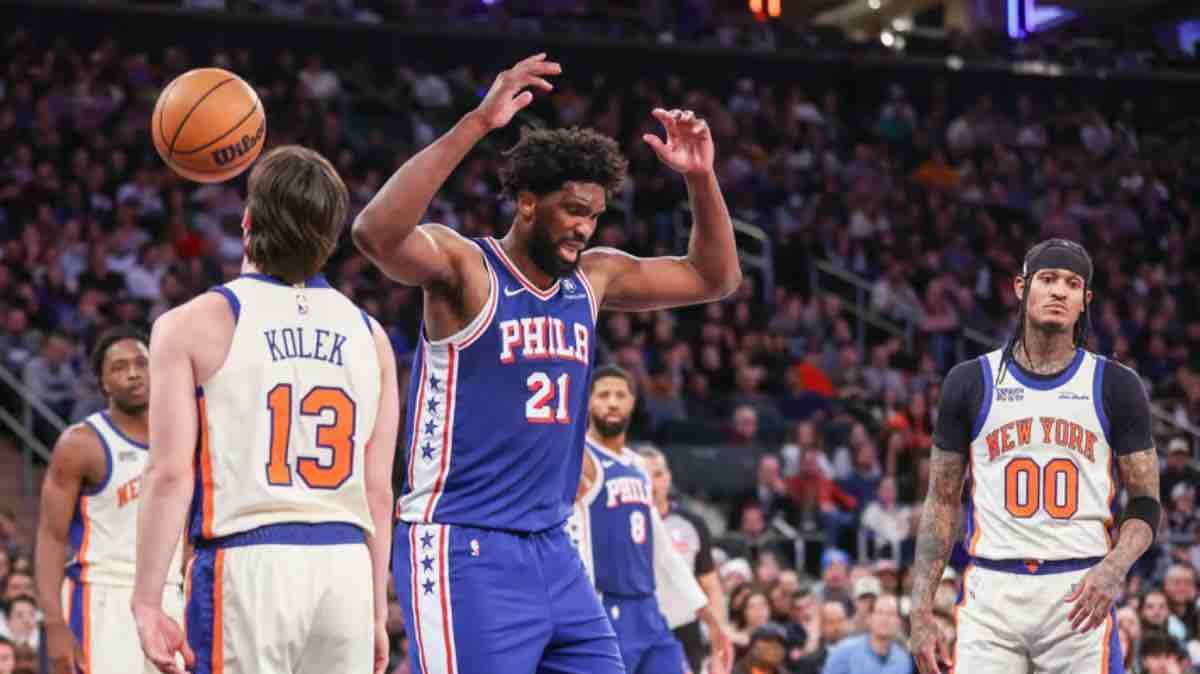
The New York Knicks are facing a rare but troubling moment in their season. For only the second time this year, they have dropped three consecutive games, and the latest loss may be the most concerning of all. Saturday night’s 130–119 home defeat against the Philadelphia 76ers wasn’t just another loss—it was a glaring reminder that New York’s defensive issues are no longer a short-term hiccup, but a structural problem.
After a discouraging performance the night before, the Knicks were expected to respond with urgency at Madison Square Garden. Instead, they looked flat, reactive, and repeatedly exposed by a Philadelphia offense that played with confidence and rhythm from the opening tip.
A Defense That Can’t Slow Anyone Down
Defense has been a lingering concern for the Knicks all season, but during this three-game skid it has reached alarming levels. Against Philadelphia, New York allowed the Sixers to shoot 54% from the field and 47% from beyond the arc, numbers that are simply incompatible with winning basketball at a high level.
What made the loss even more frustrating was how effortless scoring looked for the visitors. The Knicks repeatedly failed to adjust, allowing Philadelphia to exploit the same actions over and over again. At one point in the third quarter, the Sixers ran the exact same offensive set on consecutive possessions, and the Knicks had no answer either time. That sequence perfectly captured the defensive confusion and lack of communication that has plagued New York recently.
Maxey and Edgecombe Torch a Passive Knicks Defense
The biggest beneficiaries of New York’s defensive lapses were Tyrese Maxey and rookie VJ Edgecombe. Maxey, in particular, dictated the pace of the game, slicing through defenders, punishing slow rotations, and forcing the Knicks into constant recovery mode.
New York struggled to contain dribble penetration, and once the defense collapsed, Philadelphia consistently made the right reads. Open threes, uncontested layups, and easy transition points piled up, making the game feel out of reach long before the final buzzer.
No More Excuses: The Knicks Were Healthy
Perhaps the most concerning aspect of the loss is that injuries can no longer be used as a shield. Both Mitchell Robinson and Karl-Anthony Towns were available and active, giving the Knicks size and rim protection on paper.
Yet the results didn’t reflect that advantage. Pick-and-roll coverage was inconsistent, help defense arrived late, and perimeter defenders were unable to stay in front of their assignments. Over the last three games, New York owns a defensive rating of 121.6, the seventh-worst mark in the league during that span—a stark contrast to what’s expected from a team with championship aspirations.
Why Defense Could Define the Knicks’ Ceiling
The Knicks are built to contend. Their roster depth, offensive versatility, and physicality suggest a team capable of making a deep playoff run. But history is unforgiving when it comes to defense: teams with below-average defensive identities rarely reach the NBA Finals.
Effort alone won’t fix these issues. The problems are rooted in rotations, communication, and scheme discipline. Until those areas are addressed, nights like Saturday will continue to happen—games where opponents look comfortable, confident, and in complete control.
What Must Change Going Forward
If the Knicks want to reassert themselves among the league’s elite, defensive accountability has to become non-negotiable. That means sharper closeouts, more consistent help defense, and a collective commitment to stopping the ball at the point of attack.
This three-game losing streak doesn’t define the season—but how the Knicks respond to it might.
Other news - New York Knicks








Other news
- 22:00 NYCFC’s Post-World Cup Challenge Could Shape Its Future
- 21:21 Knicks Start 0-3: Should Fans Worry About the Real Warning Signs?
- 20:30 Etihad Park Opening Date: NYCFC’s New Era Starts Here
- 19:00 NYCFC Schedule Shake-Up: Three Big Dates Fans Must Know
- 17:30 Luighi’s NYCFC Future: The Clause That Could Change Everything
- 16:00 Fernández Mercau Gives NYCFC a Weapon Defenses Cannot Ignore
- 14:30 Agustín Ojeda’s Assist Surge Reveals NYCFC’s Creative Weapon
- 13:00 Luighi Wins Again: NYCFC’s Rising Forward Makes His Case
- 07:00 Alonso Martínez Returns—and NYCFC Face a Big Attack Decision
- 07:58 Carles Gil and Peyton Miller: New England’s Duo to Watch Before the Playoffs
- 02:30 Cavan Sullivan’s MLS Rise: Is Philadelphia’s Young Star Ahead of Schedule?
- 01:30 Luighi Wins Again: Is NYCFC’s Next Attacking Star Emerging?
- 00:30 NYCFC vs. Red Bull in the Playoffs? A New York Derby With Everything to Lose
- 23:30 Lewandowski vs. Müller: A Bayern Reunion With Huge MLS Stakes
- 23:00 Nashville SC Could Break Messi’s Miami Record—But There’s a Catch
- 22:57 Messi’s MLS MVP Three-Peat: Can Anyone Stop Him in 2026?
- 22:51 Luighi Does It Again: NYCFC Forward Claims Another Monthly Award
- 17:00 Playoff Math: What NYCFC Needs to Do Down the Stretch
- 15:00 The Botafogo Connection: How a Brazilian Club's Debts Are Funding NYCFC's Business
- 13:00 Is Hannes Wolf's Time in New York Coming to an End?
- 21:00 The Shift: How NYCFC Snapped Out of Its Funk in Salt Lake City
- 18:57 Six Games Left: NYCFC's Rendezvous With Destiny at Yankee Stadium
- 15:30 The Quiet Architect: Agustín Ojeda's Fingerprints All Over NYCFC's Win
- 14:30 From Disappointment to Dominance: How NYCFC Answered Their Midweek Setback
- 13:30 The Wall: Matt Freese's Masterclass Anchors NYCFC's Win Over Real Salt Lake
- 12:30 The Hero Returns: Alonso Martínez Back on the Pitch as NYCFC Beats Real Salt Lake
- 11:28 New York City FC Grind Out 2-0 Win at Real Salt Lake Despite Slow Start
- 18:00 NYCFC Turn Their Focus to New England: What Must Improve After Nashville?
- 16:30 Can NYCFC Keep Competing Until Moralez, Parks and Hannes Wolf Return?
- 15:00 NYCFC 0-0 Nashville: One Point Gained or Two Points Lost?
- 21:30 NYCFC Defend With Character, but the Attack Still Needs More Ruthlessness
- 20:00 Aiden O’Neill Makes His Mark for NYCFC: A Valuable Defensive Option for Pascal Jansen
- 18:30 NYCFC Show Their Depth: Seven Players Missing, Yet Another Clean Sheet
- 17:00 Pascal Jansen’s NYCFC Rotation Worked Defensively — But Questions Remain in Attack
- 15:30 Nico Fernández Mercau Sets the Tone: Why His Pressing Is Crucial for NYCFC
- 14:00 Bénie Traoré and Luighi Show Early Chemistry: NYCFC’s New-Look Attack Is Taking Shape
- 23:00 Luighi’s Next Step at NYCFC: From Rising Star to Consistent MLS Threat
- 22:00 Raul Gustavo’s Costly Scare: What NYCFC Must Learn From the Mukhtar Chance
- 21:00 Malachi Jones Nearly Wins It for NYCFC: Has He Earned More Minutes?
- 20:00 Agustín Ojeda Shines for NYCFC: Is a Breakout Run About to Begin?
- 19:00 NYCFC’s Biggest Problem Is Clear: Who Is Going to Score the Goals?
- 18:00 Matt Freese Saves NYCFC Again: Is He Becoming the Team’s Most Important Player?
- 17:28 NYCFC Held to 0-0 Draw by Nashville SC at Yankee Stadium
- 18:30 NYCFC Need Their Identity Back: What Happened to the Aggressive, Fearless Team Fans Expected?
- 17:00 What Should NYCFC’s Real Goal Be Now: MLS Cup, a Playoff Run or Building for 2027?
- 15:30 Nashville and New England Could Define NYCFC’s Season — The Next Two Games Suddenly Feel Massive
- 14:00 Can NYCFC’s Young Core Carry the Club Into Its Next Era?
- 20:00 NYCFC’s Next Transfer Window Could Define the Future: Three Positions New York Must Reinforce
- 18:30 Is Pascal Jansen Building the Right NYCFC for the Future? The Answer Is Still Complicated
- 17:00 NYCFC Need a Killer Instinct: Good Performances Are No Longer Enough
- 15:30 From MLS Cup Dreams to Playoff Anxiety: Where NYCFC Really Stand Right Now
- 14:00 Can NYCFC Still Win MLS Cup in 2026? Five Reasons to Believe — and Five Reasons to Worry