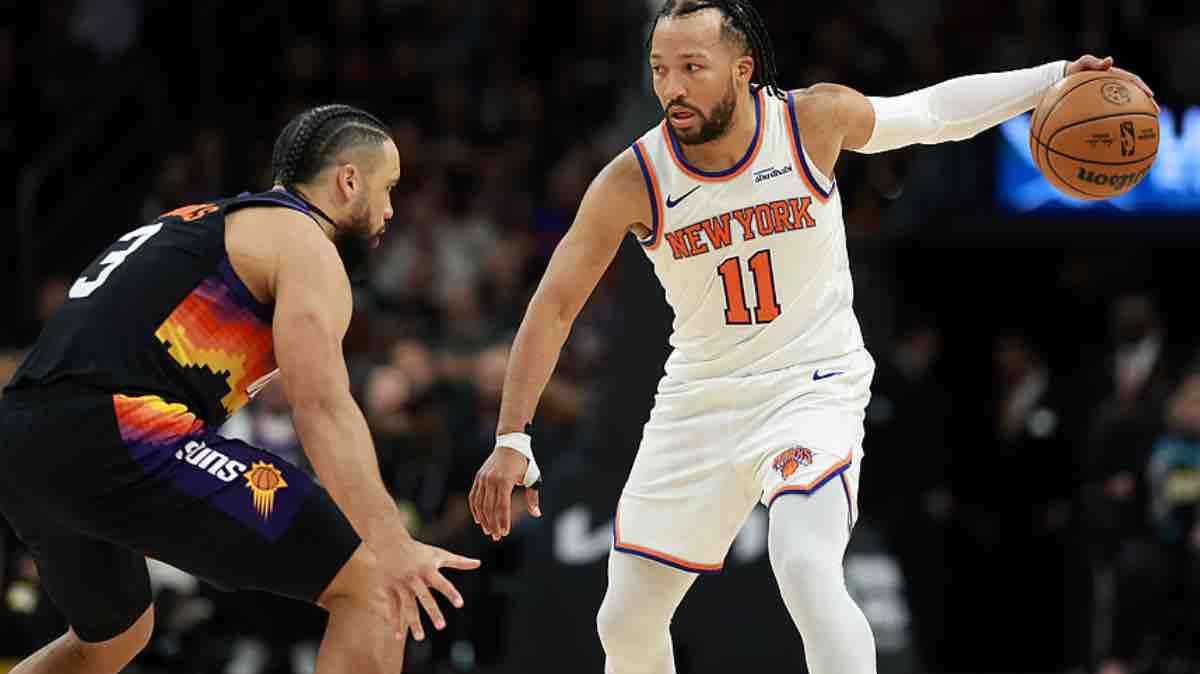
The New York Knicks’ struggles show no signs of slowing down. On Friday night, they opened their West Coast road trip with another discouraging result, falling 112–107 to the Phoenix Suns. The loss marked New York’s fifth defeat in its last six games, reinforcing growing concerns about execution, chemistry, and late-game reliability.
For three quarters, the Knicks looked competitive. When the game tightened in the final minutes, however, their two stars vanished—and the result followed a familiar, troubling script.
Fourth-Quarter Breakdown Dooms New York
Jalen Brunson and Karl-Anthony Towns carried much of the offensive load through the first three periods, keeping New York within striking distance. That momentum completely evaporated in the fourth quarter.
The duo combined to shoot just 1-for-7 in the final frame. Even more alarming, Towns attempted only one shot over the final 12 minutes, effectively removing himself from the offensive equation. Without consistent creation or spacing, the Knicks’ offense stalled, becoming predictable and inefficient when it mattered most.
Phoenix capitalized, executing cleaner sets while New York settled for contested jumpers and rushed possessions.
Inconsistent Production from Towns Remains a Major Issue
This game once again highlighted the ongoing inconsistency surrounding Karl-Anthony Towns. While his overall stat lines often appear respectable, his influence fluctuates dramatically from quarter to quarter. In critical moments, the Knicks need Towns to be assertive—both as a scorer and a pressure release valve.
Instead, his passivity late against Phoenix allowed the Suns to focus defensive attention on Brunson, shrinking the floor and choking off driving lanes. For a team built around a two-star offensive engine, that imbalance is unsustainable.
Brunson Forced Into Tough Shots Late
Brunson, meanwhile, appeared to press in the closing minutes. With limited off-ball movement and little secondary creation, he was forced into heavily contested attempts, many coming late in the shot clock. While Brunson has earned the trust to take those shots, the lack of variety in New York’s late-game offense is becoming increasingly concerning.
When defenses can predict where the ball is going—and who is taking the shot—the margin for error disappears.
Chemistry and Identity Still Unclear
Perhaps the most troubling takeaway is that the Knicks still don’t look like a connected group. Offensive possessions lack rhythm, defensive rotations come a step late, and trust between units seems inconsistent. These are issues that tend to surface most clearly in close games—and right now, New York is losing nearly all of them.
For a team with playoff ambitions, failing to close games consistently is a red flag that can’t be ignored.
Urgency Growing as Road Trip Continues
The Knicks are running out of time to correct course. A tough stretch of the schedule lies ahead, and slipping further could cost them critical ground in the Eastern Conference standings. Adjustments—whether tactical, rotational, or mental—must happen quickly.
If New York wants to escape this spiral, it starts with its stars reclaiming control late in games—and the team rediscovering a shared offensive identity when pressure is highest.
Other news - New York Knicks









Other news
- 22:00 NYCFC’s Post-World Cup Challenge Could Shape Its Future
- 21:21 Knicks Start 0-3: Should Fans Worry About the Real Warning Signs?
- 20:30 Etihad Park Opening Date: NYCFC’s New Era Starts Here
- 19:00 NYCFC Schedule Shake-Up: Three Big Dates Fans Must Know
- 17:30 Luighi’s NYCFC Future: The Clause That Could Change Everything
- 16:00 Fernández Mercau Gives NYCFC a Weapon Defenses Cannot Ignore
- 14:30 Agustín Ojeda’s Assist Surge Reveals NYCFC’s Creative Weapon
- 13:00 Luighi Wins Again: NYCFC’s Rising Forward Makes His Case
- 07:00 Alonso Martínez Returns—and NYCFC Face a Big Attack Decision
- 07:58 Carles Gil and Peyton Miller: New England’s Duo to Watch Before the Playoffs
- 02:30 Cavan Sullivan’s MLS Rise: Is Philadelphia’s Young Star Ahead of Schedule?
- 01:30 Luighi Wins Again: Is NYCFC’s Next Attacking Star Emerging?
- 00:30 NYCFC vs. Red Bull in the Playoffs? A New York Derby With Everything to Lose
- 23:30 Lewandowski vs. Müller: A Bayern Reunion With Huge MLS Stakes
- 23:00 Nashville SC Could Break Messi’s Miami Record—But There’s a Catch
- 22:57 Messi’s MLS MVP Three-Peat: Can Anyone Stop Him in 2026?
- 22:51 Luighi Does It Again: NYCFC Forward Claims Another Monthly Award
- 17:00 Playoff Math: What NYCFC Needs to Do Down the Stretch
- 15:00 The Botafogo Connection: How a Brazilian Club's Debts Are Funding NYCFC's Business
- 13:00 Is Hannes Wolf's Time in New York Coming to an End?
- 21:00 The Shift: How NYCFC Snapped Out of Its Funk in Salt Lake City
- 18:57 Six Games Left: NYCFC's Rendezvous With Destiny at Yankee Stadium
- 15:30 The Quiet Architect: Agustín Ojeda's Fingerprints All Over NYCFC's Win
- 14:30 From Disappointment to Dominance: How NYCFC Answered Their Midweek Setback
- 13:30 The Wall: Matt Freese's Masterclass Anchors NYCFC's Win Over Real Salt Lake
- 12:30 The Hero Returns: Alonso Martínez Back on the Pitch as NYCFC Beats Real Salt Lake
- 11:28 New York City FC Grind Out 2-0 Win at Real Salt Lake Despite Slow Start
- 18:00 NYCFC Turn Their Focus to New England: What Must Improve After Nashville?
- 16:30 Can NYCFC Keep Competing Until Moralez, Parks and Hannes Wolf Return?
- 15:00 NYCFC 0-0 Nashville: One Point Gained or Two Points Lost?
- 21:30 NYCFC Defend With Character, but the Attack Still Needs More Ruthlessness
- 20:00 Aiden O’Neill Makes His Mark for NYCFC: A Valuable Defensive Option for Pascal Jansen
- 18:30 NYCFC Show Their Depth: Seven Players Missing, Yet Another Clean Sheet
- 17:00 Pascal Jansen’s NYCFC Rotation Worked Defensively — But Questions Remain in Attack
- 15:30 Nico Fernández Mercau Sets the Tone: Why His Pressing Is Crucial for NYCFC
- 14:00 Bénie Traoré and Luighi Show Early Chemistry: NYCFC’s New-Look Attack Is Taking Shape
- 23:00 Luighi’s Next Step at NYCFC: From Rising Star to Consistent MLS Threat
- 22:00 Raul Gustavo’s Costly Scare: What NYCFC Must Learn From the Mukhtar Chance
- 21:00 Malachi Jones Nearly Wins It for NYCFC: Has He Earned More Minutes?
- 20:00 Agustín Ojeda Shines for NYCFC: Is a Breakout Run About to Begin?
- 19:00 NYCFC’s Biggest Problem Is Clear: Who Is Going to Score the Goals?
- 18:00 Matt Freese Saves NYCFC Again: Is He Becoming the Team’s Most Important Player?
- 17:28 NYCFC Held to 0-0 Draw by Nashville SC at Yankee Stadium
- 18:30 NYCFC Need Their Identity Back: What Happened to the Aggressive, Fearless Team Fans Expected?
- 17:00 What Should NYCFC’s Real Goal Be Now: MLS Cup, a Playoff Run or Building for 2027?
- 15:30 Nashville and New England Could Define NYCFC’s Season — The Next Two Games Suddenly Feel Massive
- 14:00 Can NYCFC’s Young Core Carry the Club Into Its Next Era?
- 20:00 NYCFC’s Next Transfer Window Could Define the Future: Three Positions New York Must Reinforce
- 18:30 Is Pascal Jansen Building the Right NYCFC for the Future? The Answer Is Still Complicated
- 17:00 NYCFC Need a Killer Instinct: Good Performances Are No Longer Enough
- 15:30 From MLS Cup Dreams to Playoff Anxiety: Where NYCFC Really Stand Right Now
- 14:00 Can NYCFC Still Win MLS Cup in 2026? Five Reasons to Believe — and Five Reasons to Worry